Large-Scale Greening in China: Scientists Reveal the Consequences of Massive Tree Planting
China has planted billions of trees over nearly 50 years to combat desertification, but researchers warn of severe ecological risks and groundwater depletion.
 💡Tech
Photo: UNIAN
Key points
- China planted 66 billion trees over 50 years to fight desertification
- The green belt improved carbon absorption and increased summer rainfall
- Scientists warn of severe groundwater depletion and risks to local wildlife
Large-scale environmental initiatives often bring both ecological benefits and hidden long-term risks to natural ecosystems. For nearly fifty years, China has been implementing a massive anti-desertification project that has resulted in the planting of approximately 66 billion trees. Launched back in 1978, the initiative aimed to create a vast green belt around the Taklamakan Desert in Xinjiang to stop the spread of sand.
Climate Impact and Water Concerns
Originally known as the Three-North Shelterbelt Forest Program, the project sought to protect agricultural lands in northern China from advancing sands and dust storms. Over the decades, the country's forest cover increased from 10% to over 25%, culminating in the completion of a 3,046-kilometer green barrier around the Tarim Basin. Experts utilized drought-resistant plants such as Populus euphratica and saxaul, employing advanced machinery and drones for planting and maintenance.
A study published in early 2026 by researchers led by Professor Yuk Yung from the NASA Jet Propulsion Laboratory showed that the green areas successfully reduced local carbon dioxide levels and doubled summer rainfall due to the cooling effect of the vegetation. However, experts express deep concern over the immense pressure placed on local water resources. Trees require significant moisture, raising fears among hydrogeologists that ancient underground water reserves could be severely depleted by the end of the century.
Ecosystem Vulnerabilities
- Groundwater Depletion: High water consumption by trees risks exhausting prehistoric underground aquifers.
- Biodiversity Disruption: Radical alterations to desert landscapes can negatively impact the natural habitats of native insects, reptiles, and migratory birds.
These global environmental experiments demonstrate that large-scale human intervention in natural habitats requires careful risk assessment to avoid long-term ecological imbalances.
Source UNIAN — unian.ua/ecology/za-50-rokiv-posadili-milyardi-derev-chim-zavershiv… ↗
Read next
 🏙️City
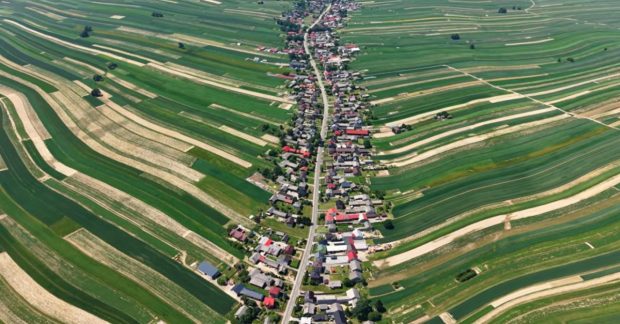
A unique 9-kilometer-long European village amazed social media with its architecture
The Polish village of Suloszowa stretches along a single road for nearly nine kilometers, preserving its medieval settlement structure.
 🛡️Security
Polish investigators reveal details and manufacturing date of downed Russian Kh-101 missile
Authorities in Poland have disclosed findings regarding a Russian Kh-101 missile manufactured in late 2026, fragments of which scattered across several voivodeships.
 ⚽Sport
General Staff of Armed Forces: 131 combat clashes recorded on frontline over past day
Over the past day, 131 combat clashes occurred along the frontline, with the highest enemy activity recorded in the Pokrovsk direction.
 🛡️Security
Russian Forces Shell Kharkiv and Region: Children and Elderly Among the Injured
Over the past day, Russian forces attacked Kharkiv and eight other settlements in the region using missiles, guided bombs, and drones.
 🏙️City
Energy crisis in Chornomorsk: Invincibility Points opened amid power outages
Chornomorsk faced large-scale electricity, heat, and water supply disruptions following enemy attacks on the region's energy grid. Invincibility Points have been opened i…
 🚨Events
American singer Miley Cyrus secretly marries for the second time in Palm Springs
Pop star Miley Cyrus has officially tied the knot with musician Max Morando during an intimate wedding ceremony in California.